
800.992.9302

(Updated September 30, 2026)
In recent years, new factories, gymnasiums, indoor pools, and other large open-ceiling venues have decided to forego traditional sheet metal ductwork for their HVAC systems in favor of fabric-lined ductwork.
Quick Answer: Most commercial duct socks should be inspected and cleaned about once a year. Food plants, indoor pools, and other humid or hygiene-critical spaces need more frequent cleaning, and so does white fabric. Professional duct sock cleaning means unzipping and removing each section, washing it in commercial machines with cold water and fabric-safe detergents, air-drying it, then inspecting and reinstalling it according to the manufacturer's instructions.
In this blog, we explain what a duct sock is, when and how to clean it, and where you can get professional help ensuring the health of your air, people, and products.
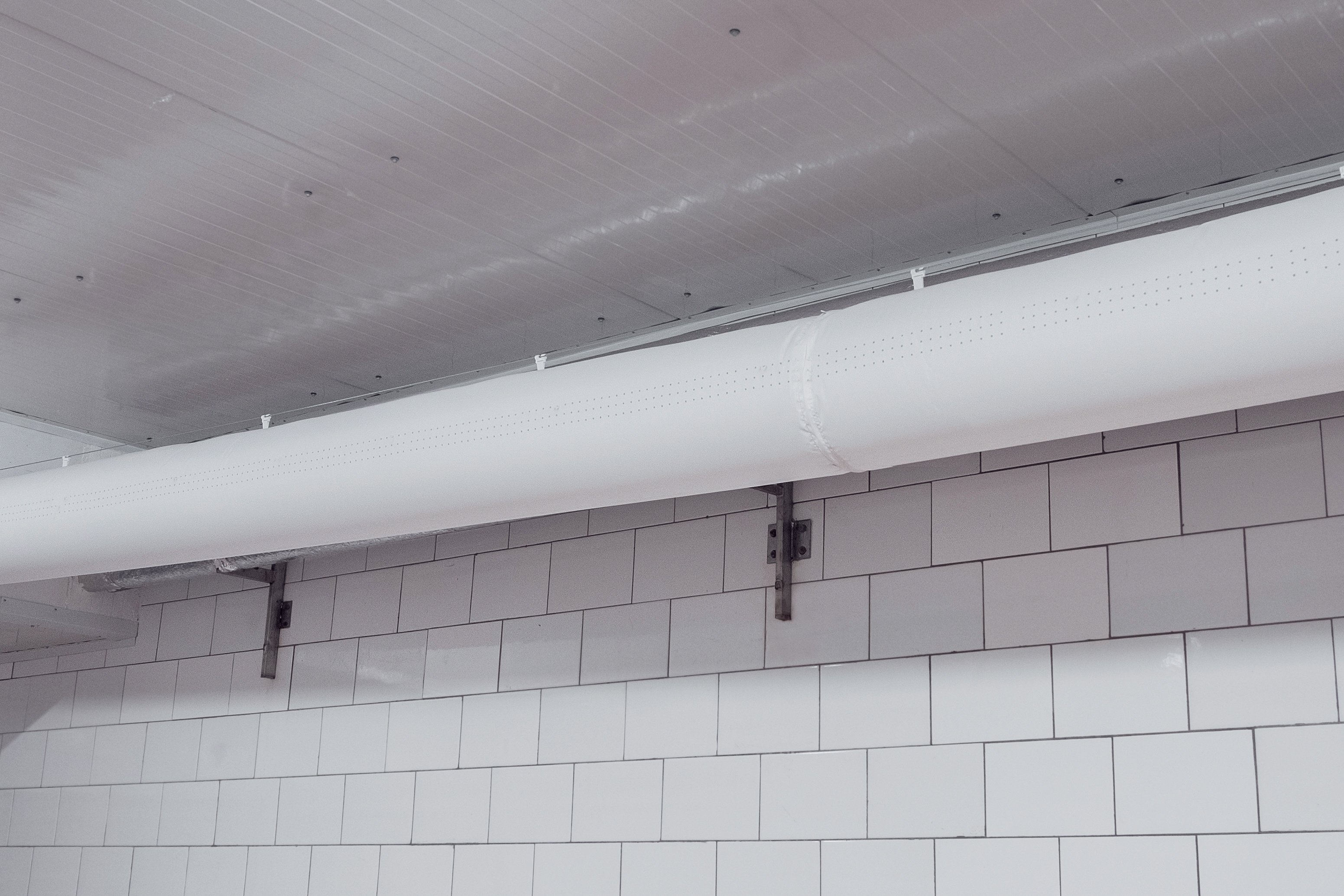
Fabric ductwork, also known as air-conditioned socks or duct socks, is an affordable, aesthetically pleasing, and flexible way to deliver fresh air in open-ceiling buildings.
Duct socks are made of durable fabric, are incredibly flexible, and can be installed in a variety of colors. They come in sections, connect with zippers, and are suspended from the ceiling with a system of rods and rings.
Facility managers love duct socks because they’re easy to install, maintain, and deliver air more efficiently than conventional sheet metal ductwork.
Traditional sheet metal systems are cleaned in place. Technicians open access points and use negative-air machines, brushes, and air whips to remove debris from inside the ductwork as part of professional commercial air duct and HVAC cleaning.
Duct socks work the other way around. Because the fabric hangs in open view and comes apart at the zippers, the whole system is taken down and laundered, inside and out. That makes a fabric system easier to get truly clean, but it also means dirt shows sooner and the job needs lifts, a large-capacity laundry, and a clean drying space.
| Factor | Sheet Metal Ductwork | Fabric Duct Socks |
| Cleaning method | Cleaned in place with negative-air vacuums, brushes, and air whips | Removed and laundered in commercial washers |
| Access | Access doors and openings into concealed ductwork | Personnel lifts to unzip sections from the suspension system |
| Surfaces cleaned | Interior duct surfaces | Interior and exterior of the fabric |
| How dirt shows up | Hidden until inspected | Visible discoloration on the outside of the sock |
| Typical interval | Based on NADCA inspection results and building type | About once a year, more often in high-hygiene spaces |
| Downtime | Cleaned zone by zone while the system is off | Airflow off while socks are out; usually within a work week |
The National Air Duct Cleaners Association (NADCA) recommends the annual inspection of air duct systems.
However, duct socks should be cleaned and inspected yearly. Since this ductwork is made of fabric and exposed, it gets dirtier far more quickly than traditional sheet metal ductwork.
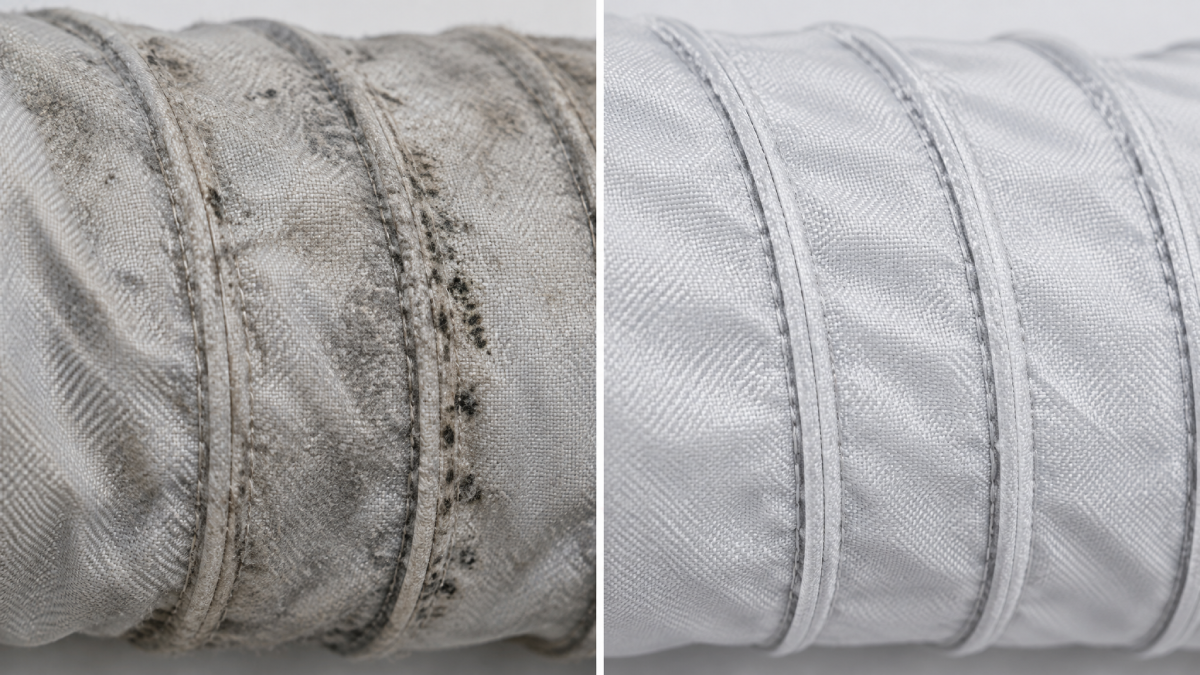
Just like any window seal or ceiling fan builds up dust over the course of the year, so will your fabric ductwork. Since this fabric is usually colored, this buildup becomes easy to spot as the material begins to discolor.
Additionally, this type of ductwork is more susceptible to gathering mold than traditional ductwork, so regular cleaning is vital for building and occupant health.
A yearly cleaning is the baseline, not the rule for every building. The right interval depends on how much dust and moisture your space produces and how strict your hygiene requirements are. Use the table below as a starting point, then adjust based on inspections and your manufacturer's guidance.
| Facility Type | Suggested Starting Interval | Why |
| Food and beverage processing | Every 3–6 months, or per your sanitation plan | Socks often hang over exposed product, and food safety audits expect documented cleaning |
| Indoor pools and natatoriums | Every 6–12 months | Constant humidity and chlorinated air encourage microbial growth on fabric |
| Manufacturing with dust or oil mist | Every 6–12 months | Airborne particulate settles on the fabric and can clog permeable material |
| Gyms, warehouses, and distribution centers | Every 12 months | Moderate dust from foot traffic and doors; visible discoloration usually sets the pace |
| Retail, offices, and schools with good filtration | Every 12–24 months | Lower dust load, though annual inspection is still recommended |
Pro Tip: White and light-colored duct socks show soiling much faster than dark fabric.
If appearance matters in your space, plan a tighter cleaning interval for light fabrics, or consider a darker color when the socks are next replaced.
Even with a set schedule, your duct socks will often tell you when they are overdue. Keeping ventilation components clean is a core part of NIOSH guidance on improving workplace air cleanliness, so watch for these signs during routine walk-throughs:
Ready to get a quote? Service-Tech provides free estimates for duct sock and commercial duct cleaning at commercial and industrial facilities nationwide. Request a free estimate or call us today.
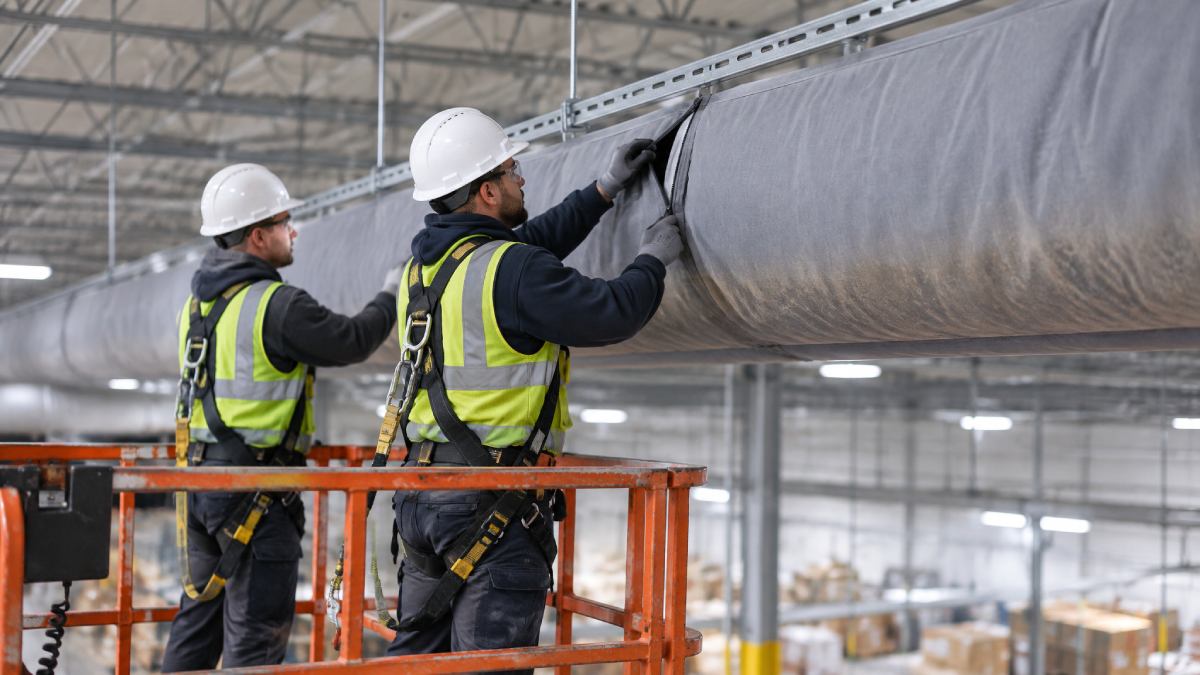
To clean your duct socks, you’ll need a team to reach up to your ductwork using personnel lifts and other scaling equipment to carefully unzip and uninstall them.
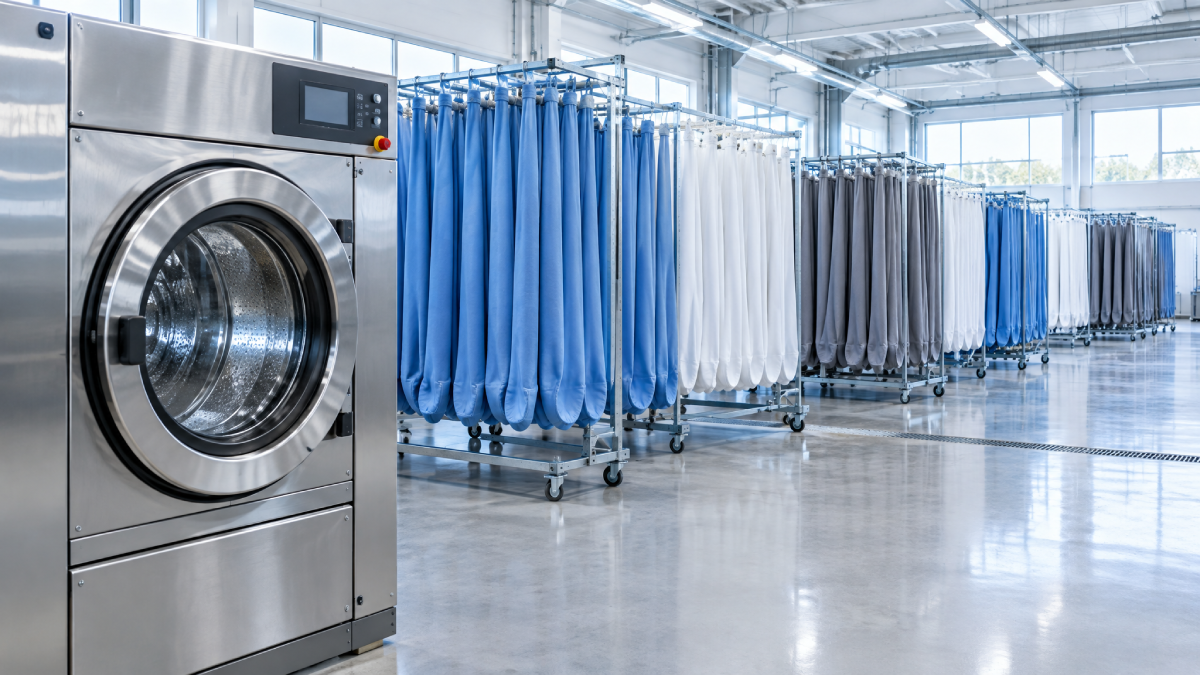
Duct socks are too large to be cleaned in a standard washing machine. Additionally, many cannot be cleaned with hot water without damaging the material.
Instead, you’ll need to wash your fabric ductwork with an industrial washing machine using cold water and specialized cleaning agents.
Remember, this isn’t like washing a shirt that’s been used for just a day. You’re cleaning up the accumulation of dust, grease, and bacteria built up over an entire year.
Additionally, due to their material and size, many fabric duct socks cannot be laundered in an industrial dryer (due to the heat) but need to be air-dried in a clean and open space.
When in doubt, follow the manufacturer's cleaning recommendation and the NADCA standard.
Here is how a professional duct sock cleaning typically runs from start to finish:
| Step | Stage | What Happens |
| 1 | Shut down and label | The air handler is turned off and each section is tagged with its position so it goes back in the right order. |
| 2 | Unzip and remove | Technicians on lifts unzip each section and slide it off the suspension system without dragging it across sharp edges. |
| 3 | Pre-clean | Heavy dust is vacuumed off, and sections are turned inside out to expose the interior surface. |
| 4 | Wash | Sections are laundered in commercial machines with cold water and fabric-safe detergents or disinfectants. Bleach is avoided unless the manufacturer allows it. |
| 5 | Air-dry | Fabric is hung to dry at room temperature in a clean, open space rather than in a high-heat dryer. |
| 6 | Inspect and repair | Seams, zippers, and fabric are checked for tears, lingering stains, or mold before reinstallation. |
| 7 | Reinstall and test | Sections are rehung in labeled order, zippers and the inlet connection are secured, and the system is run to confirm the sock inflates evenly. |
Sometimes, facility managers take shortcuts or even skip the cleaning process altogether for their duct socks. Whether this is because having the capacity to clean the duct socks properly is complicated or they simply don’t have the space or equipment to do so, this is a mistake.
For example, some facility managers merely vacuum their fabric duct sheets instead of properly washing them, but neglected or improper cleaning can only lead to damaging your ducts and making your workspace less healthy:
Risks include:
Incorrect reinstallation is easy to overlook. Loose zippers or a poorly seated inlet connection let conditioned air escape before it reaches the space, the same efficiency loss behind air duct leakage in rigid systems.
Worth Knowing: Some fabric duct manufacturers limit how many times a sock can be washed and require their own washing instructions for the warranty to stay valid. Harsh chemicals such as bleach can also shorten fabric life. Check your manufacturer's care label or documentation before any cleaning, or work with a crew that does.
If you want your fabric-lined ducts adequately cleaned with the proper handling, process, and chemicals, look no further than your fast and professional friends at Service-Tech.
We’ve been handling ducts, including duct socks, for over 30 years.
We clean your ducts by sending our professional team on lifts to carefully uninstall the fabric and move it to our industrial cleaning facilities. Here, we apply manufacturer-recommended cleaning agents to ensure your ducts are clean and free of mold or discoloration. Finally, we have a hygienic open space to air dry your ducts. Once dried, we return to your facilities and properly reinstall them.
This process can be completed within a work week or faster, so it’s recommended you schedule a time for us to come out during standard factory shutdown times.
Why Service-Tech: One crew handles removal, laundering, drying, inspection, and reinstallation, so nothing changes hands between vendors.
We schedule around planned shutdowns and holiday breaks, so your production and occupants see as little downtime as possible.
Reach out to us today for a free quote and professional service.

Guides
Most facilities should schedule duct sock cleaning about once a year, with an inspection at the same time. Food processing plants, indoor pools, and dusty manufacturing spaces often need cleaning every three to twelve months. White or light-colored fabric may also need a tighter schedule because soiling shows quickly.
No. Commercial duct socks are too large for standard washers, and many fabrics can be damaged by hot water or high-heat drying. They should be washed in commercial machines with cold water and fabric-safe detergents, then air-dried according to the manufacturer's instructions.
Vacuuming removes surface dust from the outside of the fabric and can help between cleanings. It does not clean the inside of the sock or remove mold, grease, or bacteria built into the fabric. For a full clean, the socks need to be removed and laundered.
Yes. Duct sock cleaning is a specialized type of commercial duct cleaning for fabric air dispersion systems. Instead of cleaning in place with vacuums and brushes, technicians remove, launder, and reinstall the fabric. Many facilities with duct socks also have sheet metal supply and return ducts that need regular commercial duct cleaning on their own schedule.
Professional duct sock cleaning is typically completed within a work week, depending on the number and size of sections. Removal and reinstallation take the most on-site time, while washing and air-drying happen off-site. Scheduling the work during a planned facility shutdown keeps downtime to a minimum.
Minimize machine downtime and maintain a clean and safe environment for your employees with an HVAC system cleaning partner backed by a history built on hard work, integrity and a commitment to excellent service. Let’s talk about a cleaner, healthier environment.
