
Industrial & Commercial Cleaning Services in Tallahassee, FL
Tallahassee's buildings answer to auditors — state facility managers, university plant departments, agency procurement officers. Service-Tech brings 66 years of standards-based air-system and industrial cleaning to the capital region, serving the Tallahassee area since 2023.
- NADCAMember since 1990
- 100,000+Facilities serviced since 1960
- 4.9Rated across 111 Google reviews
- Veteran-ownedUS Army veteran ownership since 2019
Service-Tech Corporation provides industrial and commercial cleaning services in Tallahassee, Florida — serving the Tallahassee area since 2023 at (850) 756-0150, under Florida license CAC1819231. This is a market where the biggest facility portfolios belong to institutions: the Capitol complex and state agency buildings, FSU and FAMU campuses, hospitals, and the commercial buildings that support them. Institutions don't buy cleaning the way small offices do. They buy documented scope, referenced standards, and vendors who survive an audit — and that's precisely the kind of contractor Service-Tech has been since 1960.
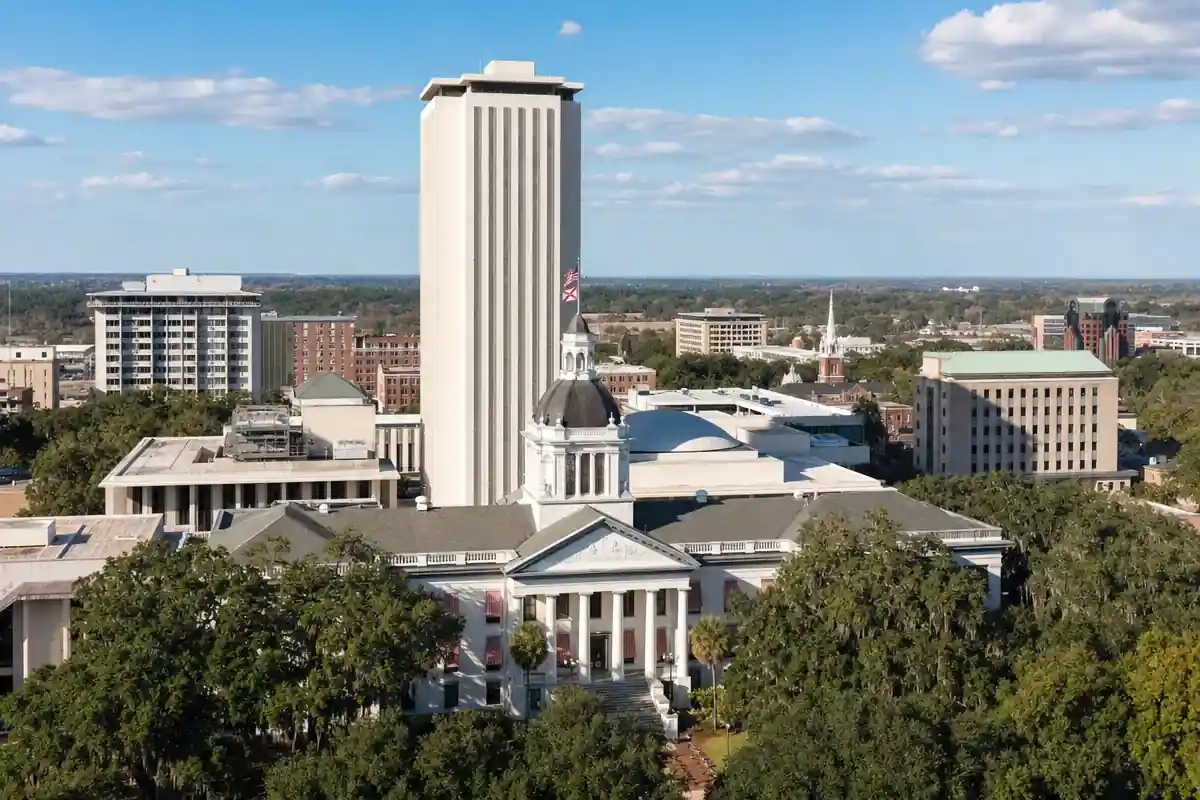
A Government and Campus Town With Institutional Air Systems
The companies ranking for commercial cleaning in Tallahassee are janitorial franchises with near-duplicate city pages. None of them speak to what actually differentiates this market.
The state facility portfolio. State agency buildings procure formally: written scopes, standards references, and service documentation aren't nice-to-haves, they're line items in the bid. Air duct cleaning that references the NADCA ACR standard, kitchen exhaust work that cites NFPA 96, cooling tower cleaning that slots into a written water-management program — this is language a state facility manager can carry into a procurement file, and it's how we write every Tallahassee scope.
Campus-scale infrastructure at FSU and FAMU. A major university is a small city: dining halls with high-volume kitchen exhaust, laboratory buildings with specialized ventilation, dormitory air handlers serving thousands of students, and central energy plants with cooling towers. Each of those systems carries its own cleaning standard and its own inspection exposure, and campus plant departments need one vendor who can scope across all of them.
North Florida humidity and the mold question. Tallahassee summers load buildings with moisture. In institutional buildings that sit partially occupied — session-driven state offices, semester-driven campus buildings — HVAC systems cycle through humid idle periods that promote microbial growth on coils, in plenums, and along duct liner. Source-removal cleaning of the air path is the maintenance response that protects both the equipment and the indoor-air-quality record.
A market with no specialist. No ventilation, exhaust, or industrial cleaning specialist ranks in Tallahassee's commercial cleaning results — the field is janitorial franchises and directory pages. For facility managers, that has meant importing specialty contractors ad hoc. Service-Tech now covers the capital region as a dedicated service area, dispatching the same crews and standards that serve our Florida operation under license CAC1819231.

Specialty Cleaning Services for Tallahassee Facilities
- Industrial cleaning — Industrial vacuuming, overhead and process-equipment cleaning for plants, utilities, and back-of-house institutional spaces. Dry ice blasting at a $2,000 minimum engagement.
- Commercial air duct cleaning — NADCA ACR-standard source removal for state buildings, campus facilities, healthcare, and offices. From $1,375.
- Cooling tower cleaning — Fill, basin, and distribution-system cleaning for central plants and commercial towers. $1,375 minimum engagement.
- Kitchen exhaust hood cleaning — NFPA 96 hood-to-fan cleaning from $599 per cleaning for dining halls, restaurants, and institutional kitchens, by an IKECA member company.
- Rope access services — Redundant two-rope access, under a documented fall-protection training program, for stacks, towers, and building exteriors.
The full catalog is on our services page.
What to Require in an Industrial Cleaning Bid
A working checklist for government and campus facility managers writing scope for air-system or industrial cleaning — the procurement guidance no other Tallahassee cleaning page offers:
- Name the standard in the scope. "Clean the ductwork" invites the thinnest possible interpretation. "Source-removal cleaning per the NADCA ACR standard" or "exhaust system cleaning per NFPA 96" makes bids comparable and work verifiable.
- Require documentation deliverables. Before-and-after photographs and a written service report should be specified as deliverables. They're what turns a cleaning invoice into an audit-ready record.
- Ask who performs the work. Require the bidder to state whether crews are their own employees. Service-Tech's work is performed by our own field technicians — 50+ companywide.
- Ask for verifiable memberships. NADCA and IKECA memberships can be checked; vague "certified" claims can't. Service-Tech has held NADCA membership since 1990.
- Require licensing. For this scope of work in Florida, ask for the license number in the bid. Ours is CAC1819231.
- Fix pricing to an assessment. Site-assessed fixed scopes protect budgets. Our assessments are free, travel is factored into the quote, and published starting prices (duct work from $1,375, hood work from $599) anchor the numbers.
Scheduling Around Session and Semester
Tallahassee runs on two calendars, and facility work has to respect both. State buildings are easiest to service outside legislative session, when occupancy drops and access is simpler; we plan multi-building duct or tower work into those windows. Campus buildings flip the logic: dining exhaust and dormitory air-handler work belongs in semester breaks, while central-plant work follows the university's outage schedule. Because our crews serve the Tallahassee area on a dispatch model, booking ahead for these windows matters — reserve break-week and post-session dates early and the crew is committed before the calendar crunch.
What Each Discipline Actually Involves
State and campus facilities buy against a specification, so here is the standard each service is performed to and the physical work it entails.
- Duct cleaning is performed to NADCA's ACR standard. Contaminants are mechanically dislodged and extracted simultaneously: rotary brushes and compressed-air whips agitate the duct interior while the system is held under continuous negative pressure through HEPA filtration. ACR's gravimetric acceptance test — 0.75 mg of residue per 100 cm² of duct surface — is a specifiable, verifiable number, which is what a state procurement file needs. A shedding fibreglass liner is encapsulated with an antimicrobial coating or replaced.
- Cooling tower cleaning follows ASHRAE 188 sequence. Cells are isolated and drained, basin deposits brushed out, and the loop dosed to 5–10 ppm free chlorine and circulated at least an hour before mechanical cleaning begins (AWT guidance). ASHRAE 188 sets a twice-yearly minimum and is the standard of care a health department reaches for after a case cluster; CMS separately requires a water management programme in healthcare and long-term-care facilities. Scale is descaled chemically, biofilm is stripped mechanically.
- Hood cleaning is measured against NFPA 96. A comb gauge reading 0.002 in (50 µm) of grease depth requires the entire exhaust system cleaned; 0.078 in (2,000 µm) requires it immediately. Panels are locked out, flammable solvents are prohibited, and crews scrape and degrease from hood plenum to rooftop fan. Table 11.4 sets the minimum frequency by cooking volume — the schedule a campus dining contract should be written against.
- Combustible dust housekeeping has a code trigger. NFPA 660 sets the action level at a 1/32 in (0.8 mm) layer over 5% of floor area and prohibits clearing dust with compressed air. Conductive vacuums are bonded and grounded to the equipment; confined spaces are purged, permitted, and continuously monitored before and during entry.
- Rope access is documented rigging. Technicians descend on two independently anchored ropes — a working line and a separate backup — and use rebelays (an anchor below the main one, pulling the rope off the fall line) and deviations to hold the rope clear of an edge. It reaches stack interiors, high steel, and roof centres without scaffold, and every position is planned before anyone leaves the ground.
- Dry ice blasting is non-abrasive and residue-free. Pellets at −109 °F embrittle the contaminant and sublimate on impact, expanding up to 800 times in a few milliseconds to lift it clear; at Mohs 1.5–2 the medium is softer than the substrate (figures per Cold Jet). No grit, no water, no secondary waste stream to dispose of — which simplifies both the work plan and the disposal paperwork. CO₂ gas settles low, so enclosed spaces are ventilated and monitored.
How We Work in Tallahassee Facilities
Free site assessment.
We inspect and photograph your systems and deliver a fixed, standards-referenced scope — written so it can drop into a procurement file. Travel is factored into the quote.
Scheduled execution.
Work windows planned around session, semester, and building occupancy, with containment appropriate to occupied institutional space.
Documented closeout.
Before-and-after photo evidence and a written service report for your compliance record.
Who Service-Tech Is
Founded in Cleveland in 1960 by Gerald Alan Sutton, family-owned for three generations of leadership until 2019, and veteran-owned since 2019 under US Army veteran Gabriel S. Chick, Service-Tech has serviced more than 100,000 facilities in 66 years. Clients rate us 4.9 stars across 111 Google reviews. We've been a NADCA member since 1990, hold IKECA membership, and operate in Florida under license CAC1819231 — serving the Tallahassee area since 2023 at (850) 756-0150.
Service Area: The Capital Region and Big Bend
(850) 756-0150
We serve a 150-mile radius across the Tallahassee area — Leon, Gadsden, and Wakulla counties and the wider Big Bend region, including Quincy, Crawfordville, Monticello, and Perry. Facilities elsewhere in Florida, including Tampa Bay, can find their nearest Service-Tech coverage on the service areas page.

Write the scope once, correctly — standards-referenced, documented, and priced from a free on-site assessment.
Frequently Asked Questions
How quickly can you respond to a Tallahassee facility?
We serve the Tallahassee area since 2023 on a dispatch model, with crews scheduled after a free site assessment. Office hours are Monday–Friday 8:30am–4:30pm, and for unplanned shutdowns or urgent contamination events we offer rapid emergency response — call (850) 756-0150.
Which Tallahassee-area facilities do you serve?
State agency and Capitol-complex-area buildings, FSU and FAMU campus facilities (dining, labs, dorms, central plants), hospitals and clinics, commercial offices, and the region's kitchens and industrial sites. Our work targets engineered systems — ducts, exhaust, cooling towers, and high structures — not janitorial services.
What's your service radius in the Tallahassee area?
150 miles, covering Leon, Gadsden, and Wakulla counties and the Big Bend region. Travel is factored into your quote with no separate surcharge line.
Are you licensed for this work in Florida?
Yes — Service-Tech operates under Florida license CAC1819231. We're also a NADCA member since 1990 and an IKECA member company, and we've serviced more than 100,000 facilities since 1960.
Can you work around the legislative session and the academic calendar?
Yes — that's how we plan Tallahassee work. State-building projects schedule most smoothly outside the legislative session; campus dining, dorm, and central-plant work books into semester breaks and scheduled outages. Reserve those windows early and the crew is committed before demand peaks.
What does commercial cleaning of building systems cost in Tallahassee?
Commercial air duct cleaning starts from $1,375 and kitchen exhaust hood cleaning from $599 per cleaning. Cooling tower cleaning carries a $1,375 minimum engagement and dry ice blasting a $2,000 minimum. Everything else is quoted after a free on-site assessment.
Request Your Free Estimate
Use the form below or call the office nearest you. For unplanned shutdowns, contamination events, or failed inspections, call rather than write — we mobilize rapid-response crews by phone.