The Problem
Miami Valley Hospital South includes a 60,000-square-foot medical office building, a cancer center and a main hospital unit. During routine HVAC maintenance, the facility's test-and-balance engineers found duct leakage that was hurting the HVAC system's performance, and the hospital had an ongoing mandate to reduce energy use.
The Work
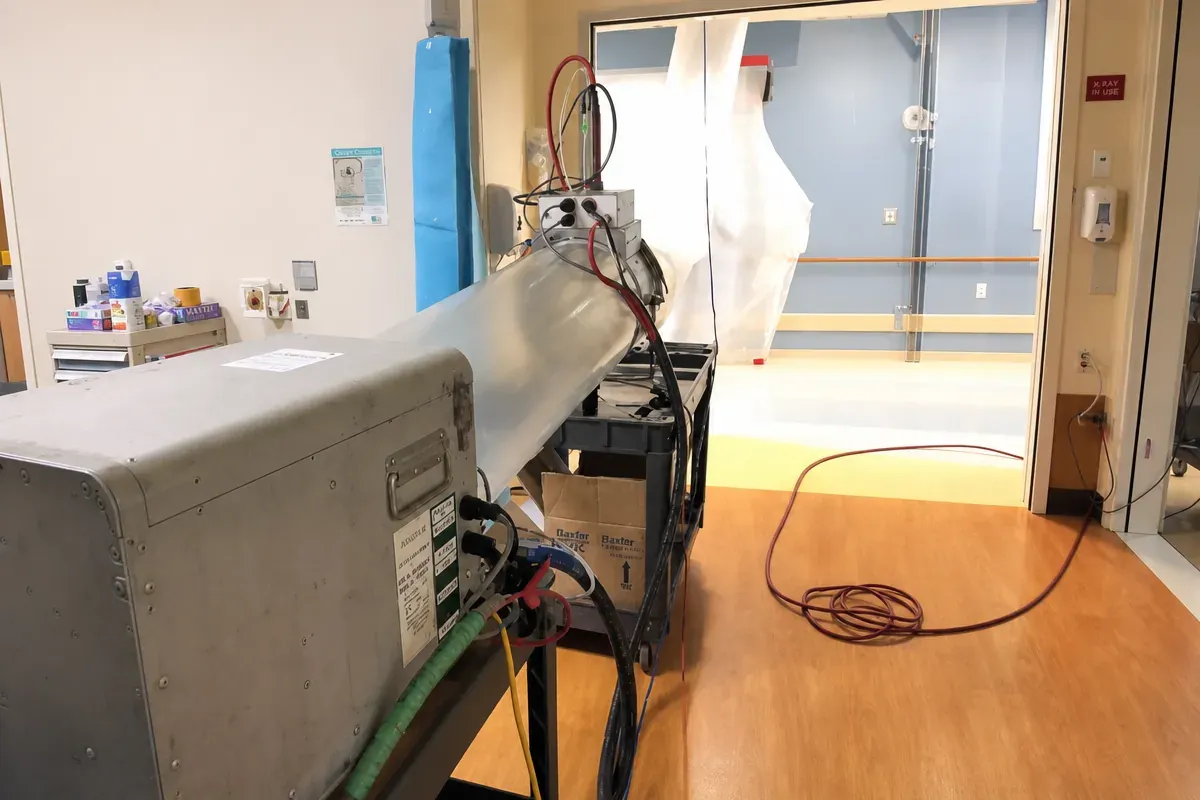
Service-Tech sealed the duct system serving the six-story medical office building with Aeroseal in one day. The test-and-balance engineer and the facility operations manager watched the process on a graph of the leakage rate as the sealant worked.
The Outcome
The Aeroseal Certificate of Completion showed leakage falling from 1,673 CFM to 576 CFM, a 65.6% reduction. With the leaks sealed, the engineers lowered the fan speed, saving 57,000 kWh. The hospital estimated annual savings of about $5,278 and a payback of about three years. After similar results on a second trial project, the hospital was looking at other HVAC systems in its facilities for the same treatment.
Before Aeroseal: 1,673 CFM; after Aeroseal: 576 CFM (65.6% less leakage).
Source: Aeroseal Certificate of Completion figures, as published in Aeroseal's case study.
What the Engineers Said
"Once the walls are up, it's very difficult to get to a majority of leaks. So if you have a lot of ductwork that is hard to access, using this (Aeroseal) technology could make a lot of sense." — Jason Heppe, Test & Balancing Engineer, Kehoe Air Balancing Company
"I focus exclusively on healthcare facilities, and I think that any one of my clients would have an application for this technology. If this (sealing project) was done manually, it would have potentially taken weeks rather than a couple of days to complete." — David Smith, Account Executive, Siemens Industry Inc.
Sources: Aeroseal case study, "Miami Valley Hospital South"; Airways Systems case study of the same project. Percent reduction calculated from the certificate figures.