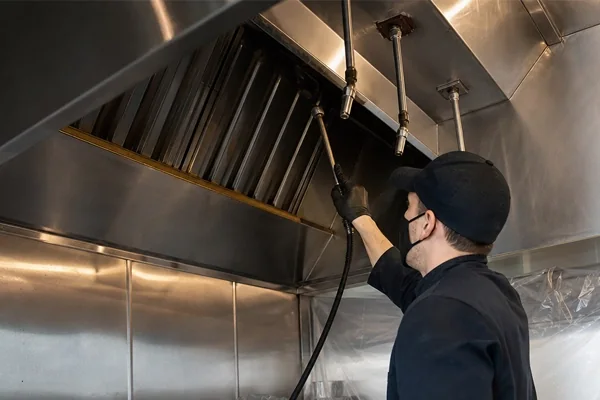
Most operators only ever see the before and after. Here is the full job — prep to sticker — and how to verify your crew did all of it.
Direct Answer: A professional kitchen hood cleaning is a top-to-bottom degreasing of the entire exhaust path — hood, filters, accessible ductwork, and rooftop fan — using plastic containment, food-safe degreasers, and hot-water pressure washing, finished with a dated service sticker and a written report. A complete professional kitchen exhaust hood cleaning covers the whole system to bare metal, not just the visible hood.
Who Shows Up, and When?
Hood cleaning happens when your kitchen is closed. Crews typically arrive after close or before prep — for most restaurants that means late night or very early morning — so the cooking line is cold and the system can be shut down safely. Expect a crew of technicians with a hot-water pressure washing rig, degreasing chemicals, containment plastic, ladders, and roof access equipment. The crew lead should walk the system with you (or your closing manager) before starting: hood count, fan locations, access panels, and anything already damaged that needs to be documented before work begins.
The Step-by-Step Job Chronology
Retailer and SaaS versions of this guide list steps in the abstract. This is the actual sequence a working crew follows, and why each step exists.
- 01
Arrival, walkthrough, and power lockout
The crew confirms scope, photographs the system's pre-cleaning condition, and shuts down and locks out the exhaust fan and any suppression-system interlocks so nothing energizes mid-clean. Pre-photos matter: they are your evidence of what accumulation looked like at the start of the interval.
- 02
Containment and prep
Cooking equipment under the hood is covered, and plastic sheeting is taped from the hood edges down to funnel wash water into collection containers or a floor drain — not across your line and into your dining room. Good containment is the single most visible difference between a professional crew and a cheap one.
- 03
Filter removal and soak
Grease baffle filters come out first and go into a degreaser soak or get pressure washed separately. Badly worn or warped filters get flagged in the report — a bent baffle bypasses grease straight into the duct.
- 04
Chemical application
Alkaline degreaser is applied to the hood plenum, duct access points, and fan components and given dwell time to break down polymerized grease. On heavy accumulations, crews scrape solidified grease by hand before any washing — pressure alone does not remove hardened deposits.
- 05
Hot-water pressure washing
The plenum, accessible duct runs, and hood interior are washed to bare metal. Vertical duct runs are cleaned from access panels; where panels are missing or spacing is inadequate, that limitation goes in the report (and a panel installation recommendation with it).
- 06
Rooftop fan work
The exhaust fan is opened or hinged back, and the blades, housing, and grease containment around the fan base are degreased and washed. Fan work is on the roof, in the dark, and it is the step most often skipped when nobody is checking.
- 07
Polish, reassembly, and restart
Filters are reinstalled, the hood exterior and stainless are polished, containment plastic comes down, the floor is cleaned, and the fan and suppression interlocks are returned to service.
- 08
Sticker and documentation
The crew applies a service sticker to the hood — company name, date, and areas cleaned, as NFPA 96 requires — then photographs the finished system and writes up the service report.
How Long Does a Hood Cleaning Take?
Duration scales with the system, not the square footage of your kitchen: hood count, duct length and configuration, number of fans, roof access, and how much grease has accumulated since the last service. A single-hood system with straightforward roof access is a same-visit job completed within one closed window; multi-hood systems with long vertical runs or several rooftop fans take proportionally longer and are sometimes scheduled across consecutive closed nights so you never lose operating hours. Your quote should state the expected window up front.
What Should You Receive After the Cleaning?
This is the accountability angle most "what to expect" articles skip. When the crew leaves, you should hold four things:
- Before-and-after photos of the hood plenum, duct interior at access points, and the fan — not just the shiny hood exterior.
- A written service report documenting what was cleaned, what was inaccessible and why, system deficiencies found (missing access panels, damaged filters, fan wear, grease leaks), and recommendations.
- A dated service sticker on the hood with the company name and areas cleaned — the first thing a fire inspector looks for.
- Your next due date based on your NFPA 96 frequency class, so the next cleaning gets scheduled before you are out of compliance rather than after.
Under the ANSI/IKECA C10 reporting approach, areas not cleaned must be documented as clearly as areas that were. A report with no exceptions listed on an older system is often a report that was not honestly written.
The Parts Bad Crews Skip — and How to Verify They Didn't
Kitchen exhaust fires start in the parts you cannot see from the cooking line. The chronic skip list:
- Vertical duct runs. The hardest, dirtiest part of the system and the chimney a fire climbs. Verify: ask to see in-duct photos from the access panels, not just hood photos.
- The rooftop fan. Blades and housing carry heavy grease and are out of sight. Verify: after-photos of the open fan, and grease absent from the fan base and surrounding roof surface.
- Behind and above the filters (the plenum). Some crews wash filters and the visible hood face and call it done. Verify: pull one filter after the service and look up into the plenum with a flashlight — you should see bare metal, not black glaze.
- Duct sections between access panels. Long horizontal runs with sparse panels cannot be fully reached. Verify: the report should say so explicitly and recommend added panels, not stay silent.
If your last report has none of these areas documented, that is a reason to re-bid the work before your next fire inspection, and to consider pairing the cleaning with an NFPA 96 compliance cleaning review of your access panels and frequency class.
What Does a Professional Hood Cleaning Cost?
Service-Tech Corporation's kitchen exhaust hood cleaning starts from $599 per cleaning. Final pricing depends on hood and fan count, duct configuration, accumulation level, and access — which is why quotes follow a site assessment rather than a phone guess. Travel is factored into the quote; there is no surcharge line.
Post-Service Verification Checklist for Owners
Before you sign off, run this five-minute check while the crew is still on site:
- Pull one baffle filter: is the plenum behind it bare metal?
- Ask for the in-duct and fan photos on the tech's phone or tablet before they leave the lot.
- Confirm the sticker is applied, dated, and lists areas cleaned.
- Confirm the fan runs and the suppression interlocks were returned to service.
- Confirm the report notes any inaccessible areas and deficiency recommendations.
TL;DR — The Whole Job in Four Sentences
A professional hood cleaning covers the full exhaust path — filters, hood plenum, accessible duct, and rooftop fan — using containment, degreaser dwell, hand scraping, and hot-water pressure washing, performed while your kitchen is closed. You should receive before/after photos, a written report that documents exceptions as well as work performed, a dated NFPA 96 sticker, and your next due date. The fire risk lives in the parts you cannot see, so verification beats trust: check the plenum, demand the duct and fan photos. Cleanings start from $599 — more hood and fire-safety guides are on our blog.
Frequently Asked Questions
Do I need to close my kitchen for a hood cleaning?
The cooking line must be cold and the exhaust system shut down, so cleanings are scheduled around your closed hours — typically overnight or early morning. A professional crew works inside that window and returns the system to service before you reopen, so most operators lose no business hours.
Does hood cleaning include the rooftop exhaust fan?
It should. NFPA 96 treats the entire exhaust system — hood, filters, ductwork, and fan — as one fire-protection assembly, and the fan is a major grease accumulation point. Confirm fan work is in scope before you sign, and ask for after-photos of the opened fan as proof.
What is the sticker the crew puts on the hood?
NFPA 96 requires the cleaning contractor to apply a label showing the company name, the date of service, and the areas cleaned. Fire inspectors check it first, and insurers may request it after a loss. No sticker — or a sticker with no areas listed — is a compliance red flag.