800.992.9302

(Updated September 14, 2026)
Legionnaires’ outbreaks like this keep happening - and cooling towers are frequently the source.
Quick Answer: Cooling tower cleaning removes the biofilm and stagnant water where Legionella bacteria multiply, then disperse through a tower’s mist — the source of roughly half of all Legionnaires’ disease outbreaks. Facilities that follow a twice-yearly cleaning schedule and a documented ASHRAE 188 water management program significantly reduce that risk.
In June 2019, a hospital in Central Ohio reported that seven patients had contracted Legionnaires’ disease, an illness linked to Legionella bacteria. About half of Legionnaires’ outbreaks are spread from the mist generated off cooling towers on air conditioning units, according to David Krause, senior toxicologist for Forensic Analytical Consulting Services in Tallahassee, FL (source: The Columbus Dispatch, June 4, 2019).
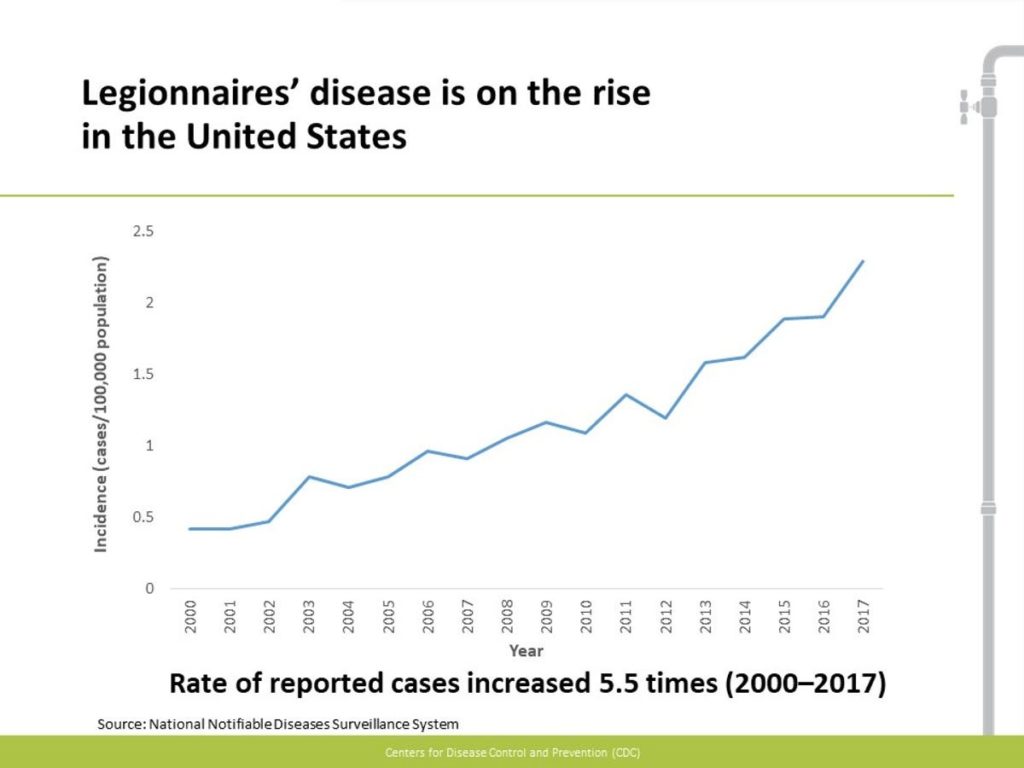
The case that made headlines in Central Ohio wasn’t an isolated event - it was part of a longer trend. The Centers for Disease Control and Prevention (CDC) documented nearly 50,000 confirmed cases of Legionnaires’ disease between 2000 and 2015 alone, and the chart above - based on CDC surveillance data through 2017 - shows just how sharply reported cases climbed over that period.
Worth Knowing: That upward trend didn’t stop in 2017. CDC surveillance data show reported Legionnaires’ cases continued rising through a peak in 2018, dipped briefly during the early pandemic years, and have been climbing again since 2021 - meaning cooling tower maintenance is just as relevant today as it was when this post was first published.
Cooling towers cool building water by evaporating a portion of it into the air - and that evaporation process creates a fine mist. If Legionella bacteria are growing in the tower’s water (which happens easily in warm, stagnant conditions with biofilm or scale buildup), that mist can carry the bacteria well beyond the building itself. Anyone who breathes it in is at risk of infection. Because cooling towers and other water sources are a well-documented origin point for Legionella, it is critically important to have your systems properly cleaned and maintained as part of your annual maintenance program, alongside other high-risk areas of your buildings.
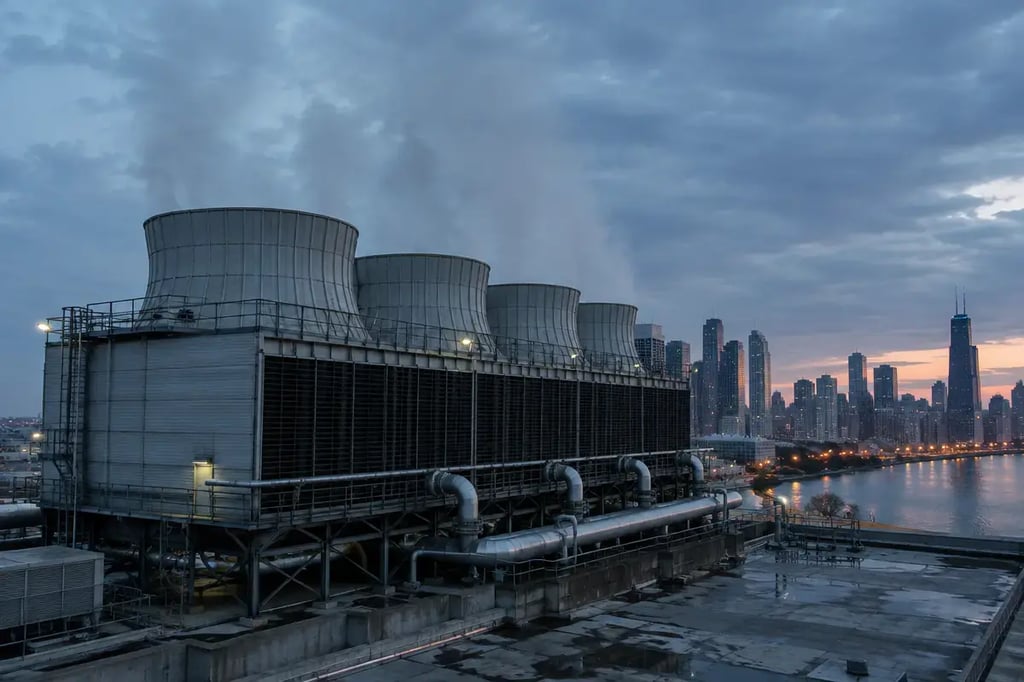
In late July 2025, a Legionnaires’ disease outbreak in Central Harlem, New York City, sickened 114 people, hospitalized 90, and caused 7 deaths. Investigators used genetic matching to trace the source to the cooling towers of two nearby buildings.
Worth Knowing: In response, New York City’s health department cut the mandatory cooling tower testing interval from every 90 days to every 30 days and increased fines for non-compliant facilities. Outbreaks like this are a reminder that even well-regulated cities can be caught off guard when a single cooling tower falls out of its maintenance schedule.
Industry guidance from ASHRAE, OSHA, the CDC, and the EPA generally points to the same baseline: clean and inspect cooling towers at least twice a year, with additional attention at key points in the operating cycle.
| Situation | Recommended Action |
| Standard operating season (spring–fall) | Clean at least twice a year — once before spring start-up, once after peak summer operation |
| Before seasonal start-up | Inspect and clean before the first extended run of the season to clear winter stagnation |
| After an extended shutdown or dormancy | Clean and disinfect before restart — stagnant water is a high-risk condition for Legionella growth |
| Following a positive Legionella test | Clean and disinfect immediately, then retest per your water management program |
Skipping these windows doesn’t just raise your Legionella risk - deferred cooling tower cleaning also carries real cost and efficiency risks, from scale buildup that reduces heat transfer to emergency repairs that cost far more than a scheduled service call.
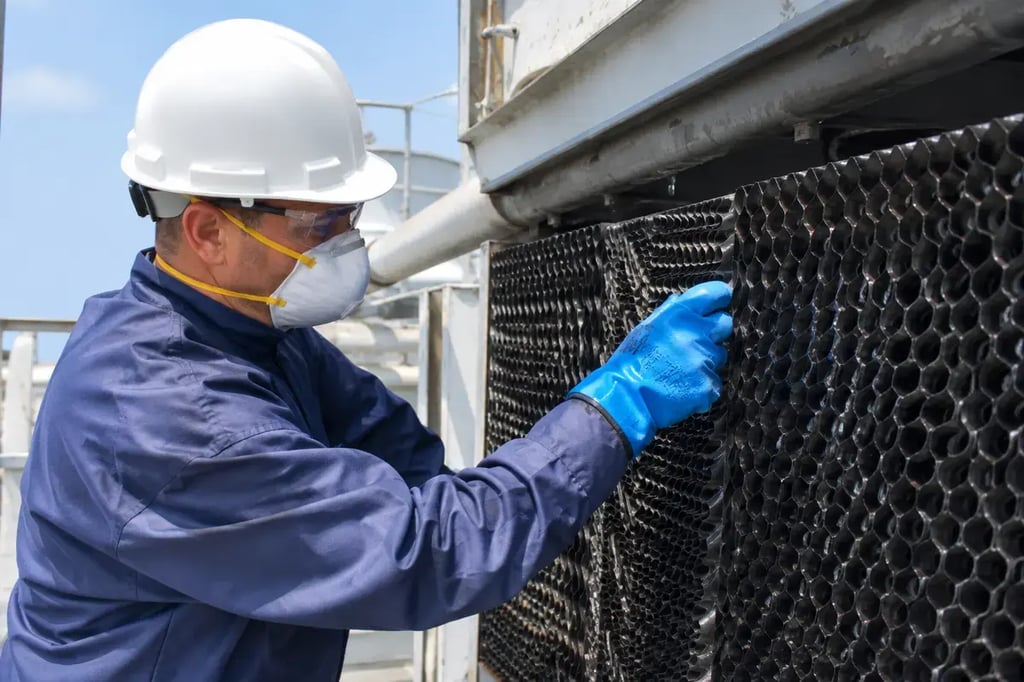
A thorough professional cooling tower cleaning service typically includes a full system inspection, draining and physically removing debris and contaminants from the basin and fill media, disinfection to industry-recognized concentration and contact-time standards, and a final rinse and refill before the system is returned to service.
Compliance Tip: Most jurisdictions and insurers now expect facilities to maintain a documented water management program under ASHRAE 188 - including a building survey, a water management team, monitoring records, and corrective-action logs.
Service-Tech can help you build and maintain that documentation as part of your regular cleaning schedule.
Ready to get a quote? Service-Tech provides free cooling tower cleaning estimates for commercial and industrial facilities nationwide. Request a free estimate online.
Most industry guidance — including ASHRAE, OSHA, and CDC recommendations — calls for a full cooling tower cleaning at least twice a year: once before seasonal start-up and once after peak summer operation. Towers should also be cleaned and disinfected after an extended shutdown or any positive Legionella test result.
According to David Krause, senior toxicologist for Forensic Analytical Consulting Services, roughly half of Legionnaires’ disease outbreaks are traced back to mist generated by cooling towers on air conditioning systems, making tower maintenance one of the highest-leverage steps a facility can take to reduce risk.
Requirements vary by state and city, but a growing number of jurisdictions — including New York City, following its 2025 outbreak — mandate registration, regular testing, and documented water management programs for cooling towers under standards like ASHRAE 188. Even where it isn’t explicitly required, insurers and OSHA’s general duty clause make routine cleaning a practical necessity.
Warning signs include visible scale or biofilm on fill media, cloudy or discolored water in the basin, unusual odors, reduced cooling efficiency, and any positive Legionella test result. Because bacteria can grow before symptoms are visible, most facilities schedule cooling tower cleaning on a calendar basis rather than waiting for warning signs to appear.
Cooling tower cleaning is the physical removal of scale, sediment, biofilm, and debris from the tower’s basin, fill media, and components. Water treatment is the ongoing chemical program — biocides, corrosion inhibitors, and scale inhibitors — that keeps the water in that clean system from recontaminating between cleanings. Facilities need both: cleaning resets the system, and treatment keeps it that way.
STC Leadership
Request a free estimate online or email info@service-techcorp.com.
Minimize machine downtime and maintain a clean and safe environment for your employees with an HVAC system cleaning partner backed by a history built on hard work, integrity and a commitment to excellent service. Let’s talk about a cleaner, healthier environment.
