Direct Answer: Commercial duct cleaning can restore fiberglass-lined ducts when the liner is still dry and structurally sound. Technicians inspect the liner, clean it under negative pressure with HEPA vacuums and soft-bristle tools, repair loose or torn sections, and, where the surface is eroding, apply a coating that locks fibers in place. Liner that is wet, moldy, or breaking apart can't be reliably cleaned and should be removed and replaced. Restoration usually costs less and disrupts less than new ductwork, but the call should be made section by section after inspection.
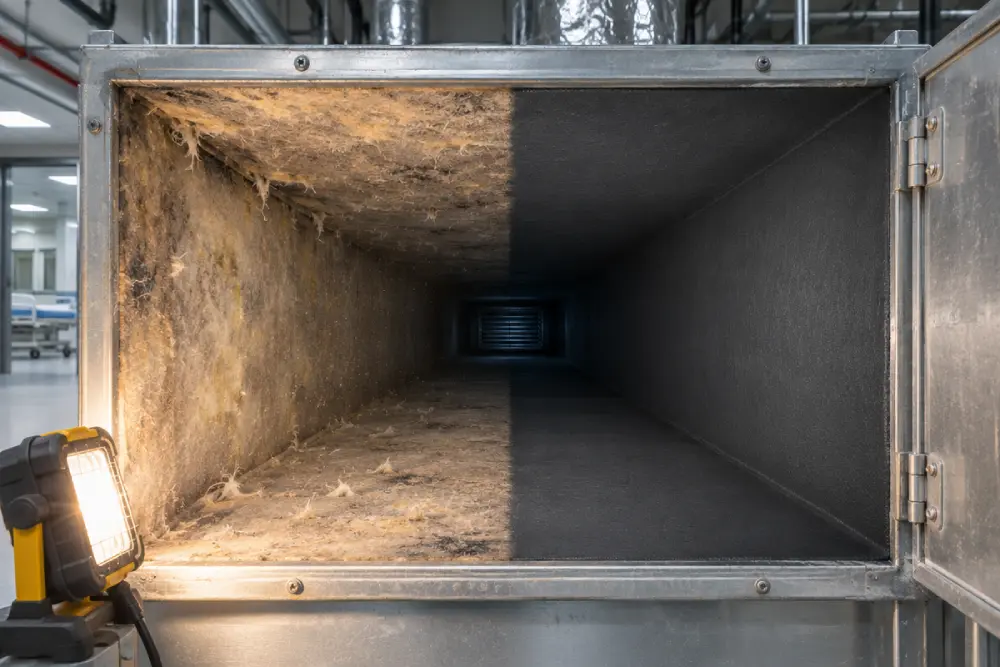
Servicing fiberglass-lined ductwork is a delicate process due to the possibility of glass particulates dislodging and escaping into the HVAC system, putting building occupants at risk. In this blog, we show you how professional cleaners meticulously clean this ductwork to ensure clean, healthy air for all building occupants.
Below, we walk through how commercial duct cleaning restores fiberglass-lined ducts, what the restoration process includes, and when replacing the liner is the better call.
How Is Fiberglass Duct Liner Cleaned Without Releasing Fibers?
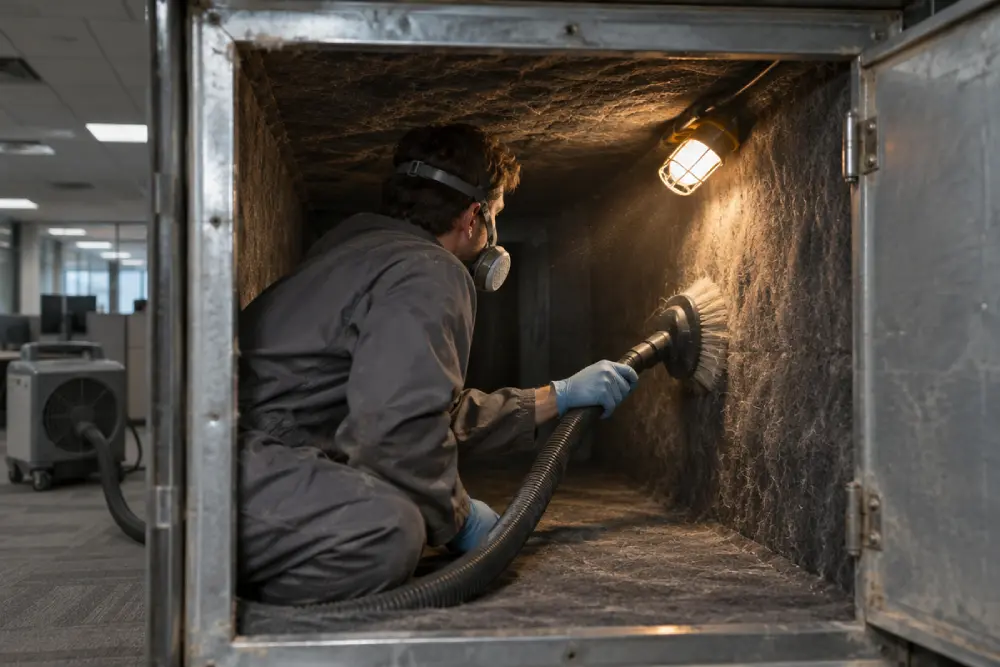
To prevent fiberglass dislodgement during the cleaning process, highly trained HVAC service technicians use HEPA (high-efficiency particulate air-filter) vacuums to safely and properly clean fiberglass-lined ducts. After removing debris and contaminants from the fiberglass, they can apply a coating, if needed, which helps keep fibers from fraying or loosening and resists mold growth on the coated surface.
In addition, the sealant creates a bond with the surface of the ductwork to further prohibit particles from entering the airstream. Similar coatings can also be applied to bare metal surfaces of unlined metal ductwork, depending on the product and the manufacturer's listing for that surface — for a closer look at the cleaning methods themselves, see can fiberglass-lined ductwork be cleaned.
Read More – Why Commercial HVAC and Air Duct Cleaning is a Great Investment
What Does Fiberglass-Lined Duct Restoration Include?
Fiberglass-lined duct restoration is commercial duct cleaning plus repair. Service-Tech handles it as one sequence, so each step sets up the next:
- Inspect and document the liner. Technicians check representative sections for moisture, mold, fraying, delamination, and loose or missing liner, and photograph conditions before work starts.
- Contain the work zone. The section being cleaned is isolated and kept under negative pressure with HEPA-filtered collection, so loosened fibers and dust are captured instead of pushed into occupied space.
- Clean with liner-safe methods. Soft-bristle contact vacuuming and compressed-air tools remove debris without tearing the liner surface. Water and steam stay out of insulated duct, as the NAIMA guidance on cleaning fibrous glass insulated ducts advises.
- Repair or replace damaged sections. Torn or loose liner is re-secured or patched, and sections too damaged to hold up are cut out and replaced.
- Coat liner where the surface is eroding. Once the liner is clean and dry, a coating can lock down loose surface fibers. Coatings are never applied over dirt or on wet liner.
- Verify and report. A post-cleaning inspection checks the result against NADCA's ACR standard, and you receive before-and-after photos for your records.
Need commercial duct cleaning for fiberglass-lined ducts? Service-Tech's crews inspect the liner first and give you a section-by-section recommendation before any work begins. Request a free estimate or call 440-735-1505.
What Does a Restored Fiberglass-Lined Duct Look Like?
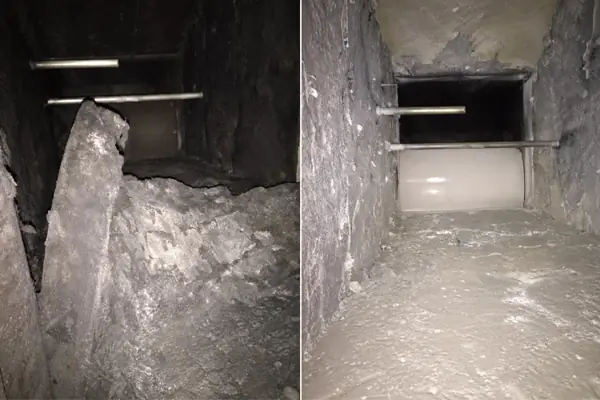
Here is an example of restored fiberglass-lined ductwork at a hospital in Northwest Ohio. Here's the difference in the duct before and after trained technicians cleaned, repaired, and sealed it with a fiber-lock coating.
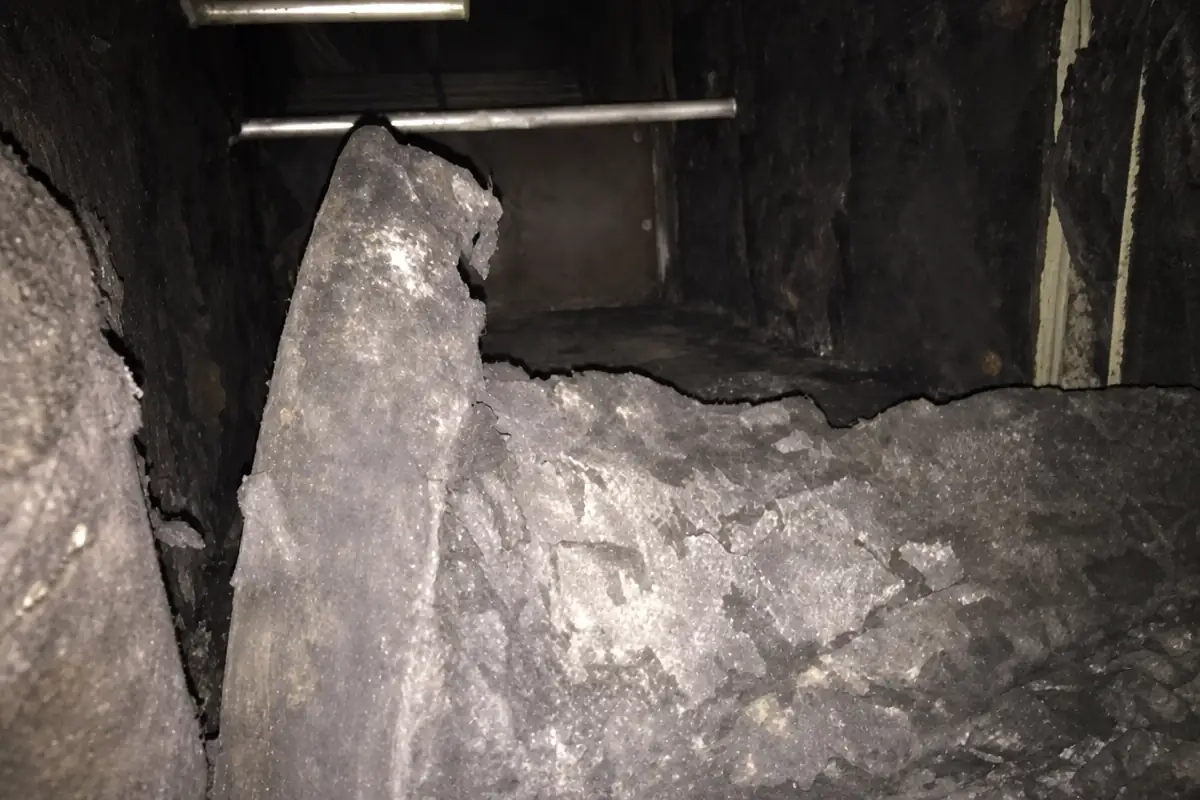
Before fiberglass ducts were repaired and cleaned. The damage and danger is clear.
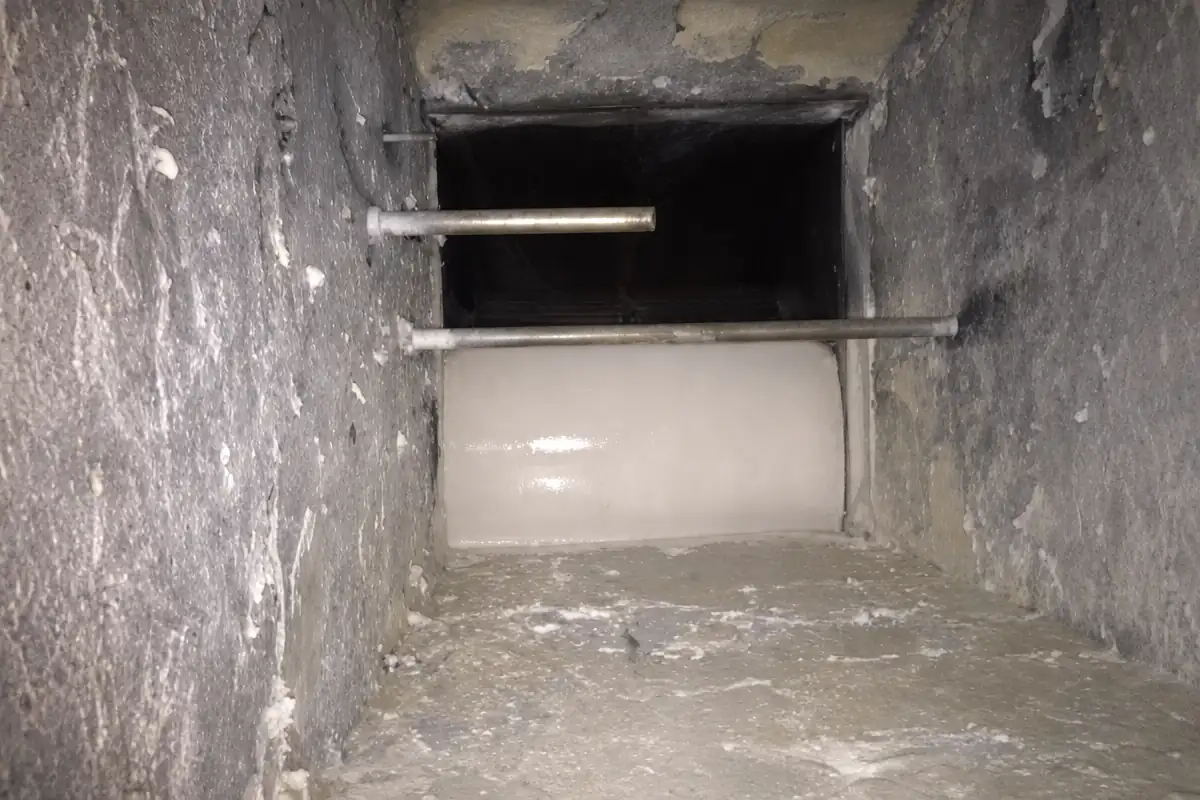
Here is that same duct after the fiberglass was restored, including a fresh coating to preserve the AC ducts and help prevent the growth of contaminants.
Is Restoring Fiberglass-Lined Ducts Cheaper Than Replacing Them?
Before new technologies were developed to safely clean and restore fiberglass-lined ducts, these systems were either replaced with new ductwork, or the damaged insulation was removed and replaced with new insulation at a significant cost. Fortunately, many of these systems can now be restored when the liner is still dry and structurally sound — our commercial air duct cleaning cost guide explains what drives the price of a cleaning project.
Here is how the two paths generally compare:
| Factor | Restoration (clean, repair, coat) | Replacement (new liner or ductwork) |
|---|---|---|
| Scope | Cleaning, spot repairs, and coating of the existing liner | Removing liner or duct sections and installing new material |
| Disruption | Work runs zone by zone under containment, often in occupied buildings | Usually needs more ceiling access, longer shutdowns, and more trades |
| Relative cost | Generally lower | Generally higher, since it adds demolition, materials, and installation |
| Best fit | Dry liner with surface dirt, fraying, or localized damage | Wet, moldy, or widely deteriorated liner |
| Limits | Can't fix liner that is wet, moldy, or falling apart | Higher cost and longer downtime |
Pricing note: The cost comparisons in this article are for general guidance only. Actual costs vary based on duct size, liner condition, access, and project scope, and pricing can change at any time. Contact Service-Tech Corporation for a current, accurate quote.
Fiberglass-lined or not, preventative maintenance is always recommended for all ductwork. The most effective way to ensure proper airflow and indoor air quality is to follow a regular maintenance schedule.
Need your fiberglass-lined ductwork cleaned or refurbished? Call the professionals at Service-Tech for a free estimate.
When Should Fiberglass Duct Liner Be Replaced Instead of Restored?
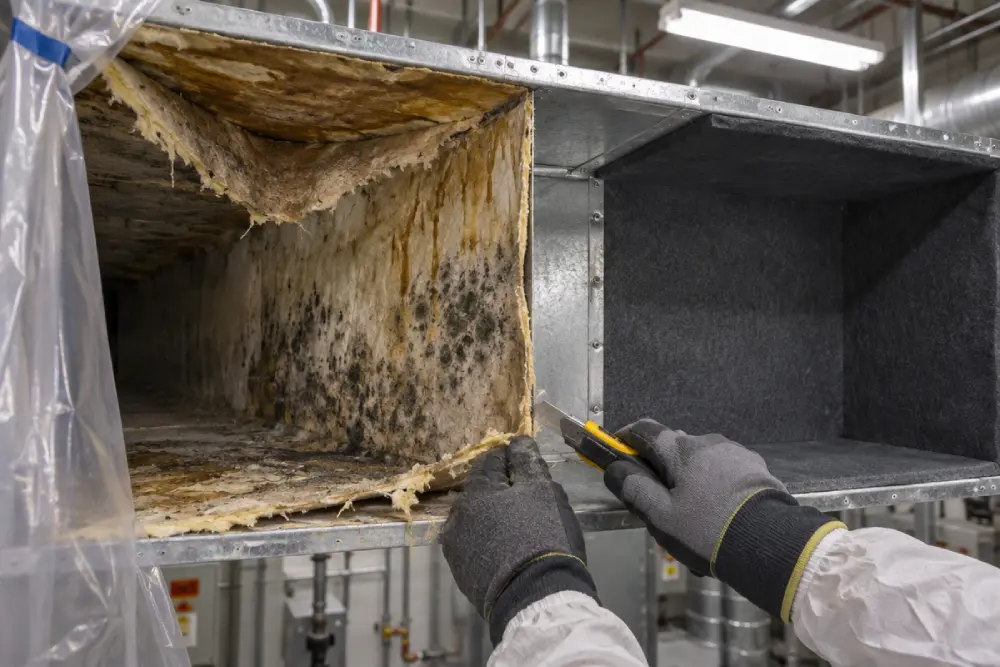
Restoration only works when there is sound liner to restore. The EPA advises that insulated duct that has gotten wet or moldy can't be effectively cleaned and should be removed and replaced. Replacement is usually the better call when:
- The liner is wet, has been wet, or shows mold growth
- Large areas are crumbling, friable, or pulling away from the duct wall
- The surface is too deteriorated for a coating to bond
- The duct was damaged by fire, smoke, or flooding
Most systems aren't all-or-nothing. A typical project restores the sound runs and replaces only the sections that fail inspection, which keeps cost and downtime down.
Do Duct Liner Coatings Replace Commercial Duct Cleaning?
No. Coatings are a repair layer, not a cleaning method. EPA guidance says sealants should only be applied, if at all, after the system has been properly cleaned, and they should never go on wet liner.
It also helps to be clear about what a coating does. The EPA notes that no chemical biocides are currently registered for use in internally insulated air duct systems, so Service-Tech treats a liner coating as a way to lock down fibers and protect the surface, not as a disinfectant. For more on why facilities seal lined ductwork, see these reasons to seal internally lined air ducts.
Coating the liner is also different from sealing leaks in the duct itself. Leaky joints and seams waste conditioned air and need their own fix — see the ins and outs of air duct leakage.
Frequently Asked Questions
Can commercial duct cleaning restore damaged fiberglass duct liner?
Yes, if the liner is still dry and structurally sound. Commercial duct cleaning removes debris with HEPA vacuums and soft-bristle tools, damaged spots are repaired, and eroding surfaces can be coated to lock fibers in place. Liner that is wet, moldy, or falling apart should be replaced instead.
When does fiberglass duct liner need to be replaced instead of restored?
Replace liner that is wet, moldy, widely crumbling or delaminating, or damaged by fire or flooding. EPA guidance says insulated duct that has gotten wet or moldy can't be effectively cleaned. Many projects restore the sound sections and replace only the ones that fail inspection.
Are duct liner coatings a substitute for commercial duct cleaning?
No. A coating should only go on after commercial duct cleaning has removed the dirt and debris, and never on wet liner. Coatings help lock down loose fibers and protect the liner surface; they don't remove contamination already in the system.
Is it safe to clean fiberglass-lined ducts in an occupied building?
It can be, with the right controls. Work zones are isolated and kept under negative pressure with HEPA-filtered collection, so loosened fibers and dust are captured instead of released into occupied space. That's how Service-Tech cleans ductwork in hospitals and office buildings during normal operations.
How often should restored fiberglass-lined ducts be inspected?
Inspection should be driven by system condition and facility type rather than a fixed calendar. Healthcare facilities commonly assess their systems annually, while offices can often go longer. Inspect sooner after water leaks, renovation dust, or a rise in indoor air quality complaints.
TL;DR — Fiberglass-Lined Duct Restoration at a Glance
- Commercial duct cleaning can restore fiberglass-lined ducts when the liner is dry and structurally sound.
- Restoration means inspection, contained HEPA cleaning, repairs, and coating where the surface is eroding.
- Wet, moldy, or widely deteriorated liner should be removed and replaced.
- Coatings go on only after cleaning and are not a disinfectant or a substitute for cleaning.
- Restoring sound sections and replacing only failed ones generally costs less than full replacement.
- Next step: request a free estimate
Related Resources
- Commercial Air Duct Cleaning
- Indoor Air Quality Services for Commercial Buildings
- Commercial Air Duct & HVAC Cleaning in Cleveland, OH
- Hospital Air Duct Cleaning: Infection Control Standards for Healthcare HVAC
- What Is Manual Entry Air Duct Cleaning?
- HVAC Cleaning Inspection Checklist
- Mold Removal: Major IAQ Improvement With Minimal Cost
About Service-Tech Corporation: Since 1960, Service-Tech Corporation has provided industrial and commercial cleaning, including air duct and HVAC cleaning, kitchen exhaust hood cleaning, cooling tower cleaning, industrial and facilities cleaning, rope access, and dry ice blasting. Offices in Cleveland, Columbus, and Dayton, OH, and Tampa, FL serve facilities across Ohio, Florida, and Arkansas. Call 440-735-1505 or request a free estimate.