800.992.9302

(Updated September 7, 2026)
Here’s what can happen: Lint accumulates in an exhaust duct, reducing the dryer’s ability to expel heated water vapor which accumulates as heat energy within the machine.
Quick Answer: Lint trapped in a dryer exhaust duct blocks airflow, causing heat to build up inside the machine until sparks from a mechanical failure ignite it. Routine dryer exhaust cleaning removes that lint before it becomes fuel, which is why fire codes and equipment manufacturers call for scheduled inspection and cleaning in commercial facilities.
As the dryer overheats, mechanical failures can trigger sparks, which can cause lint trapped in the dyer vent to ignite. And this can cause the house or building to burst into flames.
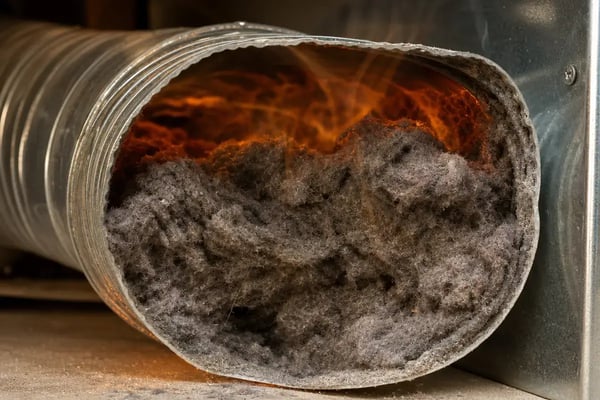
Fires originate within the dryer but spread by escaping through the ventilation duct, incinerating trapped lint, and following its path into the building wall.

The U.S. Fire Administration's analysis of clothes dryer fires found that failure to clean is the leading contributing factor in dryer fires — and because lint buildup restricts airflow long before it becomes a fire risk, the same underlying problem often shows up elsewhere in a building's ductwork. Read more about how clogged exhaust systems cause air flow problems throughout a facility.
Cleaning frequency depends on how heavily a facility's dryers are used and how long the exhaust duct run is. As a general guideline:
| Facility Type | Recommended Cleaning Frequency |
| Laundromats & commercial laundries | Every 3–6 months |
| Hotels & multifamily housing laundry rooms | Every 6–12 months |
| Senior living & healthcare facilities | Every 6 months |
| Industrial & process dryers | Per manufacturer schedule, often quarterly |
These are general guidelines — always confirm the right schedule for your facility with your local fire code and equipment manufacturer.
Facility managers don't need to wait for a scheduled inspection to spot a problem. Watch for:
The National Fire Protection Association's Clothes Dryer Safety Tip Sheet recommends cleaning the dryer vent at least once a year, more often for heavier use — guidance that commercial fire codes and insurance carriers build their own maintenance requirements around. The Consumer Product Safety Commission's Publication 5022 on overheated clothes dryers documents how quickly a blocked exhaust duct can turn into an ignition source, and Ohio's own State Fire Marshal publishes seasonal guidance on this exact risk in its Spring Clean for Safety program.
Worth Knowing: A blocked dryer vent doesn't just risk fire — insurers can deny commercial claims tied to lint fires when routine maintenance records don't exist.
Commercial and industrial dryer exhaust systems are rarely as simple as a residential setup. Multi-story buildings often run duct through long horizontal stretches, vertical risers, and booster fans to move air out of the building — every one of those extra feet and turns is another place for lint to collect out of sight. Professional technicians measure airflow and static pressure through the duct (a method outlined in NADCA's guidance on measuring dryer exhaust duct performance) to confirm the system is actually venting properly, not just visually free of lint. Some technicians pursue training through programs like the Chimney Safety Institute of America's Certified Dryer Exhaust Technician program, which is built specifically around this kind of complex commercial ductwork.
Service-Tech's commercial air duct and exhaust cleaning teams are equipped to reach these longer, more complex duct runs safely, with the source-removal methods and documentation that facility managers need for compliance records.
Ready to get a quote? Service-Tech provides free estimates for dryer exhaust and commercial duct cleaning at commercial and industrial facilities nationwide. Request a free estimate or call 866.215.7150.
Keep your buildings safe. Be sure to have your dryer exhaust systems inspected and cleaned - and if your facility has a commercial kitchen, kitchen exhaust hood cleaning carries the same fire risk and compliance requirements under NFPA 96. Contact us today!
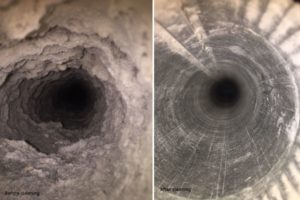
These photos of before and after cleaning show the amount of lint that accumulated in the dryer exhaust at a yoga studio in Northeast Ohio. Failure to clean out lint is the leading cause of dryer fires.
866-682-7727
info@service-techcorp.com
https://service-techcorp.com/services/
It depends on facility type and usage, but most commercial laundry operations need dryer exhaust cleaning every 3 to 12 months. High-volume laundromats and commercial laundries should be on the shorter end of that range, while lower-use multifamily or hotel laundry rooms can often go closer to a year between cleanings.
Yes. Lint is highly flammable, and a clogged vent traps heat inside the dryer instead of letting it escape. When a mechanical failure produces a spark, that trapped lint is exactly the fuel it needs to ignite — which is the core mechanism behind most dryer exhaust fires.
Requirements vary by jurisdiction and facility type, but fire codes and insurance policies increasingly reference cleaning schedules tied to national guidance like the NFPA's Clothes Dryer Safety Tip Sheet. Commercial and industrial facilities should treat documented, professional dryer exhaust cleaning as a compliance and insurance safeguard, not just a maintenance nicety.
No. The lint trap only catches a portion of the lint produced during drying — the rest travels into the exhaust duct itself, where it accumulates out of sight over months or years. Emptying the lint trap after every load is still important, but it doesn't replace periodic professional duct cleaning.
Longer dry times, a dryer or laundry room that feels unusually hot, a burning or musty smell during cycles, and visible lint around the exterior vent hood are all signs it's time for a cleaning — see the full list above.
Minimize machine downtime and maintain a clean and safe environment for your employees with an HVAC system cleaning partner backed by a history built on hard work, integrity and a commitment to excellent service. Let’s talk about a cleaner, healthier environment.
